
Guest Blog: A Posture that Welcomes
By John Wentz, CEO of Alpha USA
We invited one of our partners, Alpha USA, to talk about its experiences in creating safe, caring environments for those who want to explore the Christian faith. The Rees-Jones Foundation began partnering with Alpha in 2024 as part of its evangelism and discipleship focus. With a commitment to “help make spaces where people can freely explore the basics of the Christian faith together,” Alpha has reached many people with the message of Jesus Christ through its world-renowned course. Alpha CEO John Wentz stepped into the role in 2022 after serving in multiple leadership roles in the organization beginning in 2015. With 23 years of pastoral experience, John is a gifted communicator, trainer, and coach, and has a heart for people from different cultures.
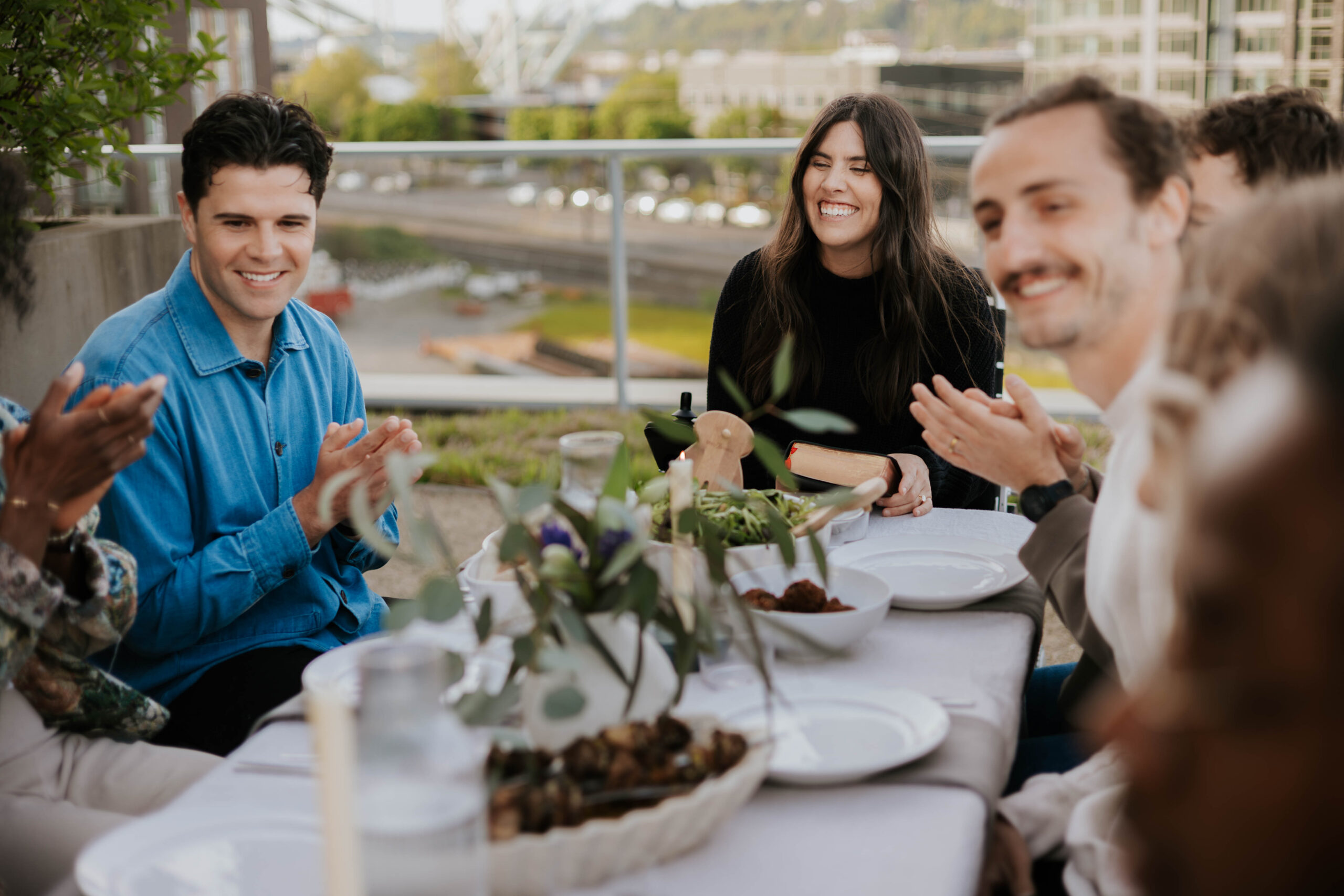
After more than two decades in pastoral ministry and now in leadership at Alpha USA, I’ve discovered that the deepest, most enduring impact in evangelism and discipleship flows not from polished programs or aggressive metrics, but from a quieter, more hospitable way of showing up. Here’s what shifted when I embraced a posture of invitation and presence.
The Posture with Which We Invite
Over time, I’ve come to believe that the way we share faith matters just as much as the message itself. The posture with which we approach evangelism and discipleship shapes the depth and longevity of the fruit we see. In my years serving as a pastor, church planter, and now leading organizational growth, this truth has become central to how I lead, and how we operate at Alpha USA. We’re not simply chasing numbers or momentum. We’re cultivating a way of being and leading that reflects the welcoming heart of Jesus.
A Discovery That Changed My Posture
This shift deepened for me during a trip to London years ago to visit with Alpha International. What started as a search for effective tools for faith exploration became a profound personal turning point. I encountered a community of people that was beautifully simple in their approach, and what stood out most was the posture with which they approached what they did. The people I met modeled a different way of being with others; something I was hungry for. They asked lots of questions and were genuinely curious. I remember speaking to one of the key leaders and thinking to myself, “He is really listening.” I realized just how much I had become accustomed to the person who would be half-listening and also looking around the room for others they could talk to.
And the way they prayed was different as well. It was more gentle and patient. There was a relaxed confidence that God would intervene, without the whole experience feeling coerced. Their prayers were often filled with spaces of silence, as if God were actually present, and they were waiting on him to do whatever he wanted to do.
They weren’t doing radically different things. They were simply doing them with a radically different posture.
From Performance to Presence
That experience really made me think about how much my own leadership had been shaped by the pressure to perform: filling rooms, hitting targets, and driving visible outcomes. It invited me into a gentler, more hopeful way—trusting that God is already at work in people’s lives. Instead of forcing conversations or outcomes, we focus on creating space.
The Posture Took Root in Evangelism and Discipleship
People are hungry and open to explore the big questions of life, purpose, and Jesus; at the same time, they are also craving welcoming, non-judgmental environments to do so. When we create these spaces, the impact is that people naturally transition into deeper discipleship through engagement with the Bible, prayer practices, small groups, and local church community.
The Counter-Cultural Power of This Posture
In a culture obsessed with scale, efficiency, and measurable results, this slower, relational way can feel inefficient at times. Yet I’m convinced it’s the kind of work that matters most to God—the kind that forms character in both hosts and guests, builds authentic community, and produces outcomes that last. The question is no longer just What are we accomplishing? It’s Who are we becoming along the way? What is something you are longing to see more of in your life or church community? How might taking a posture of slowed-down hospitality, listening and prayer have an impact?