
20 Years: Investing in Youth Formation
By Trey Hill, Senior Program Officer
I get asked from time to time: why does The Rees-Jones Foundation spend so much 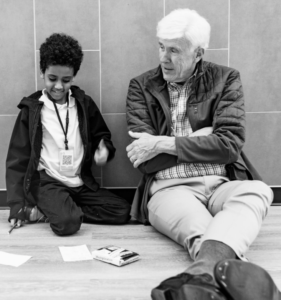 time, energy, and money on Christian schools, after-school programs, mentoring programs, and scouting? With so many pressing needs in North Texas, why is youth formation such a priority?
The answer comes back to something foundational. What happens in a young person’s life reverberates for decades. Investing in young people early, especially those growing up in tough neighborhoods or circumstances, and staying with them over time is one of the highest-value ways a foundation can change outcomes. The research bears this out, but more importantly, we’ve watched it happen time and again through the work of our youth development partners.
Let’s start with something profoundly and deceptively simple. Harvard’s Center on the Developing Child has found that children who grow up navigating serious hardship (a tough neighborhood, a difficult family situation) and still manage to thrive share one common thread: they had at least one stable, committed relationship with a caring adult. Not a perfect adult. Not a wealthy one. Just a consistent, faithful one.
That’s the engine behind mentoring programs, Christian schools, and after-school programs, and it’s why we keep funding them. Because these programs are relationship-based, their full impact often isn’t visible until participants reach adolescence and young adulthood, when young people face difficult life 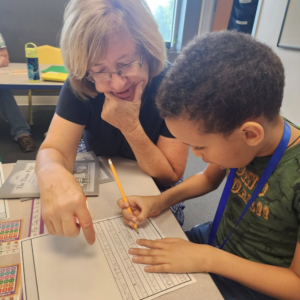 decisions that shape the rest of their lives. It is often the habits that are formed early and modeled by the adults around them that help young people make wise decisions.
Some funders focus on test scores and graduation rates. We care about those things, too. But we also believe that character (integrity, humility, perseverance, compassion) is just as important as academic performance, and harder to develop. That’s why we invest in programs that intentionally cultivate it.
The research here is encouraging, too.1 Adolescents who express faith and experience spiritual growth while young report higher levels of positive emotions, greater life satisfaction, more prosocial behavior, and stronger character. Our Christian youth formation partners, in particular, offer youth living models of the values and practices they are growing into. Strengths such as gratitude, kindness, honesty, and hope are nurtured through these programs and benefit youth as they grow up. For kids growing up in neighborhoods where the pressures are real, and the margins are thin, that kind of formation is not a luxury. It’s a lifeline.
Here’s something philanthropy doesn’t always want to say out loud: meaningful, lasting change in a young person’s life does not happen in a program year. It doesn’t always happen in two. The research on mentoring is clear that sustained, enduring relationships produce the strongest outcomes. Short-term mentoring and interventions may have some benefit, but when relationships end early, impact fades. When relationships persist over time, the impact compounds.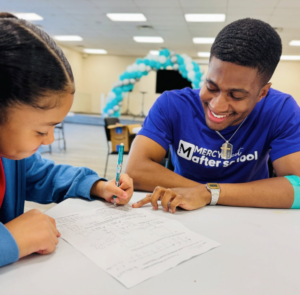
Many of our youth formation partners know this intuitively. Folks like Mercy Street, Forerunner Mentoring, and For the Nations weave spiritual formation and the Gospel into everything they do. It is not a “program” to them; it is living out their faith in highly intentional, relational ways over years with their students. They are gradually, incrementally shaping the young lives they serve; the change is profound over time.
That is why we keep investing in many of the same strong youth-serving organizations year after year. It’s not that we aren’t paying attention to results. We are. It’s that we are realistic about the timeframe. You don’t build character in a semester. You don’t usually change the trajectory of a life in ninety days. That work is slow, relational, often marked by ups and downs, which is why we stay with partners (and the kids they serve) for the long haul.
Since 2006, we’ve had the privilege of partnering with dozens of youth-serving organizations doing this work across West and South Dallas and Ft Worth: mentors, teachers, and after-school leaders who show up, day after day, for kids who need them. We have seen teenagers grow into young adults who mentor others. We have watched confidence take root in kids who had very little of it. We have had the joy of witnessing thousands of lives improved in the name of Christ.
We don’t take credit for any of that. But we are honored to have played a small part in funding the people and programs that made it possible. And we are committed to staying at it, because the young people growing up in hard places across this city deserve nothing less.
Kor, A., et al. (2019). “A Longitudinal Study of Spirituality, Character Strengths, Subjective Well-Being, and Prosociality in Middle School Adolescents.” Frontiers in Psychology, 10, 377.