
To Whom Can I Be A Neighbor?
By Mia Lee, Rees-Jones Foundation Intern
[This summer, The Rees-Jones Foundation was grateful to have Mia Lee join our team as our very own intern with the Research & Evaluation team. Mia is a student at The University of Texas and is a gifted writer who worked diligently this summer on a variety of research projects surrounding our grantees and work from the past 20 years. We invited her to share some of her insights after working on a project highlighting the West Dallas community and she gifted us with this beautiful reflection].
“‘Which of these three do you think was a neighbor to the man who fell into the hands of robbers?’ The expert in the law replied, ‘The one who had mercy on him.’ Jesus told him, ‘Go and do likewise.’” Luke 10:36–37
Just a few we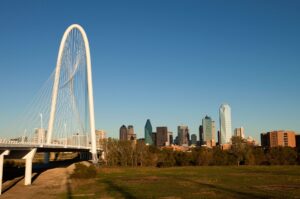 eks after completing my freshman year of college I began an internship, my first one ever, with The Rees-Jones Foundation. I went into it with a pretty limited knowledge of the philanthropic and nonprofit sectors. I associated this line of work with basic “good Samaritanism”: help those who are in need. I would come to understand later on that it extends much further than that. And so, with an eagerness to learn and work hard in an unfamiliar setting, I was assigned a research project focused on the impact of the Foundation’s work in West Dallas over the years.
As the archetypal brand-new, college-age-intern, I first tackled this project from a very academic standpoint: inquisitive about the topic at hand, but still distant because of the nature of secondary source research. I read what felt like every single available article related to West Dallas. I became familiar with its history of hardship. I learned how this neighborhood was neglected by the rest of the county, left under-resourced and largely disadvantaged. I learned how this community is suffering from the consequences of the formal end of segregation and redlining practices; how poor industrial decisions and urban planning led to poor health and dangerous living conditions. I learned how, in recent years, ambitious private 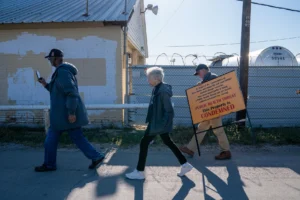 investment has poured into West Dallas vigorously but ended up creating new pressures: rising property taxes and questions about who a “revitalized” West Dallas is actually for.
But the last thing I want to do is to spin the story of West Dallas into a sob-story, because their narrative is far from one. Though its history consists of adversity, it is not defined by it. This became apparent to me because in addition to the reading I did, I also had the opportunity to tour West Dallas with some of the Foundation staff, do a few site visits with the nonprofits in the area, and have conversations with people that I otherwise wouldn’t have had. I soon realized that these experiences were far more insightful than any scholarly journal or news article I could read about. Though the research I did at my desk taught me about the physical place, it was in these conversations that I learned about the resilience of the people of West Dallas.
What struck me most was not the injustice of what had and may continue to happen in West Dallas, but the dignity with which people held onto their community anyway. It reframed the way I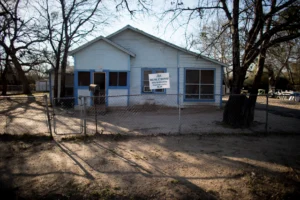 thought about nonprofit and philanthropic work. As I carried on with examining the Foundation’s grantmaking to organizations serving West Dallas, it became apparent to me that caring for a place like West Dallas isn’t about rescuing anyone. Suddenly, everything I had learned over the weeks fell neatly into line in the form of a simple realization: if you want to change a place, you have to care about it. But to really care about it, you have to care first and foremost for its people and their dignity. After all, the people of West Dallas are a people who kept showing up to city council meetings for decades, who raised children and built churches and ran corner stores on streets that the rest of the city had written off, who organized programs for the youth, who never stopped believing their home was worth fighting for. No, they don’t need to be rescued. They need people to walk alongside them as partners—as neighbors.
The work that The Rees-Jones Foundation has done in West Dallas in the past couple of decades is impactful because it is rooted in a care for the people of West Dallas. From the housing programs of Habitat for Humanity to the ways in which Wesley-Rankin Community Center pours into children and adults alike; from Mercy Street’s mentorship program to the healthcare that Los Barrios Unidos Community Clinic provides: the relationships that The Rees-Jones Foundation has built with these grantees has centered the Foundation’s identity around the idea of caring for the people first in order for a place to thrive—but in a way that is more profound than simply being the good Samaritan.
The expert of the law in the gospel of Luke asks, “who is my neighbor”, but Jesus teaches us to ask, “to whom can I be a neighbor?” When we actively seek out people to show compassion and mercy to, we are not only meeting the physical needs of our neighbors but also reflecting the generosity of God’s love for all to see.